1

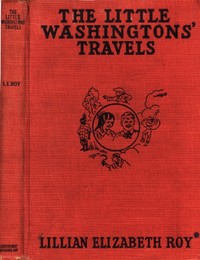
The Little Washingtons' Travels — Background and Themes
(0 User reviews)
295
Project Gutenberg
2012
Not confirmed
Voyages and travels -- Juvenile fiction; Children -- Juvenile fiction; Families -- Juvenile fiction; Washington, George, 1732-1799 -- Juvenile literature; New York (N.Y.) -- Description and travel -- Juvenile fiction; Philadelphia (Pa.) -- Description and travel -- Juvenile fiction
Readers of public-domain and historical texts
Project Gutenberg digital edition
en
Edition facts
Words
27,653
Reading time
121 min
Text sections
3
Before opening The Little Washingtons' Travels — Background and Themes, the edition data offers a quick orientation: 27,653 words, 2 hr 1 min estimated reading time, and 3 detected text sections.
The text analysis averages about 18.1 words per sentence, while the detected sections provide another way to judge how the source is divided.
Project Gutenberg metadata also associates the work with “Voyages and travels -- Juvenile fiction,” connecting these edition facts with the source record’s subject description.
Source:
Project Gutenberg record #39518
This editorial note examines how the opening, middle, and later excerpts of Lillian Elizabeth Roy's 1918 children's novel guide a first reading, focusing on the children's spirited debates, the sudden shift to a kidnapping plot, and the interplay between historical tourism and adventure.
Read the complete public-domain text at its original source.
Read on Project GutenbergThe first chapter of The Little Washingtons' Travels opens with a lively debate among the children about the purpose of Pullman parlor chairs. George Parke, Jack Davis, and Anne Davis each offer competing explanations—social convenience, scenic views, or conductor access—while John Graham is quickly silenced. This exchange immediately establishes the children's distinct voices and their tendency to argue over trivial details, a pattern that recurs throughout the excerpts. The adults, meanwhile, worry about the wisdom of bringing five lively children on a trip to New York, hinting at the tension between educational sightseeing and the children's natural mischief.
Debating the Details
The opening excerpt reveals a key structural feature: the children's arguments serve as both characterization and plot engine. George Parke, the apparent leader, tries to divert attention from the chair debate by proposing a game to spot churches. Jack Davis, the Philadelphia cousin, claims travel expertise, while Anne Davis corrects him with a practical observation about buffet service. These small disputes mirror the larger pattern of the novel, where historical facts are constantly negotiated through the children's misunderstandings and corrections. The adults' murmured concerns about the children's capacity for trouble foreshadow the later crisis, but the early tone remains light, focused on the mundane details of train travel.
A Sudden Turn to Peril
Chapter VI marks a sharp tonal shift. George, unable to sleep, examines a souvenir book of the Woolworth Building. The text notes his bare feet and new pajamas, grounding the scene in domestic detail before the intrusion. A masked man grabs him from behind, and the kidnapping unfolds rapidly: George is gagged, bound, and carried down stairs while the other children pursue in their nightclothes. The chase spills into the hotel lobby and onto Broadway, with crowds joining the pursuit. This sequence transforms the earlier travelogue into a thriller, yet the children's dialogue remains consistent—George wonders if George Washington ever faced such cowardly tactics, linking the adventure to the historical figures the family has been visiting.
Historical Play as Narrative Glue
The excerpts show that the children's historical knowledge is woven into their reactions. George's comparison of his kidnapping to George Washington's experiences is a direct example. The chapter titles—such as "The Battle of New York" and "A Fight with the Hessians"—suggest that the family's sightseeing at Revolutionary War sites provides a backdrop for the children's imaginative reenactments. The adults' plans to visit historical places are repeatedly interrupted by the children's escapades, creating a rhythm of planned education versus spontaneous adventure. This interplay is evident even in the opening debate, where the children's argument about chairs is a microcosm of their approach to learning: they absorb facts through personal experience and argument rather than passive instruction.
Voice and Dialogue as Characterization
Roy differentiates the children primarily through their speech patterns. George is impulsive and quick to deflect; Jack asserts authority based on his travel experience; Anne offers practical corrections; Martha enjoys sensory details like the spinning chair; John is eager to ask adults but is overruled. The adults speak in a more formal register, worrying about logistics and behavior. This contrast is consistent across the excerpts: the children's dialogue drives the action, while the adults react. The kidnapping scene relies on the children's voices to maintain continuity—the three pursuers call out for George, and their screams alert the hotel. Even in crisis, the children's language remains childlike, avoiding melodrama and keeping the tone appropriate for a juvenile audience.
Readers approaching The Little Washingtons' Travels for the first time should pay attention to how the children's debates and misadventures intersect with the historical settings. The excerpts suggest that the novel balances educational content with slapstick and suspense, but the incomplete text leaves open questions about how the kidnapping resolves and whether the historical lessons are ultimately absorbed. The consistent voice work and the shift from mundane argument to peril indicate a story that values both entertainment and the child's perspective on history.
Somewhere in the opening chapters of The Little Washingtons' Travels, the children’s squabbles over which ruin matters most felt like listening to my own younger self. That same restless wonder, chasing the echo of something ancient, later surfaced while reading Ayesha, the Return of She — Key Ideas to Explore, where the past doesn’t just whisper—it waits, patient as stone.
There are no reviews for this eBook.
There are no comments for this eBook.
Reader reflection
Take a moment to reflect on this book
Create a short personal record of your experience with this book.
Your progress
0
/
10
2
Was reading this book enjoyable?
3
Would you recommend this book to another reader?
4
How demanding did the text feel?
5
Which aspect of the book did you value most?
6
Did the book offer a fresh perspective?
7
How did the pace of the book feel?
8
Would this book work well in a reading group?
9
In one sentence, what did you learn?
10