1

Barry Lyndon — Story, Setting & Ideas
(0 User reviews)
681
Project Gutenberg
2003
Not confirmed
Satire; Humorous stories; Gamblers -- Fiction; Ireland -- Fiction; Europe -- Fiction; Rogues and vagabonds -- Fiction; Irish -- Foreign countries -- Fiction
Readers of public-domain and historical texts
Project Gutenberg digital edition
en
Edition facts
Words
132,516
Reading time
577 min
Text sections
13
This digital edition of Barry Lyndon — Story, Setting & Ideas is described by source-level measurements including 132,516 words, 9 hr 37 min estimated reading time, and 13 detected text sections.
The text analysis averages about 28.4 words per sentence, while the detected sections provide another way to judge how the source is divided.
Project Gutenberg metadata also associates the work with “Satire,” connecting these edition facts with the source record’s subject description.
Source:
Project Gutenberg record #4558
Thackeray's picaresque novel, narrated by the roguish Barry Lyndon, follows his rise and fall through 18th-century European society. The excerpts reveal a self-justifying narrator, intricate court intrigues, and a focus on gambling, dueling, and social climbing, with a satirical edge that undercuts Barry's boasts.
Read the complete public-domain text at its original source.
Read on Project GutenbergBarry Lyndon, first serialized in 1844 under the pseudonym FitzBoodle, presents itself as the memoir of an Irish adventurer. The excerpts show a narrator who is both candid and self-serving, recounting his pedigree and early life with a blend of pride and grievance. Thackeray's satirical voice emerges through Barry's unapologetic tone, as when he describes his family's 'tender' influence or his own 'man of spirit' actions. The catalog subjects—gambling, rogues, and Irish abroad—are clearly present, but the excerpts also reveal a dense web of European court politics and a narrative voice that constantly justifies its own amorality.
A Self-Justifying Narrator
Barry's voice dominates the excerpts, and his self-presentation is a key feature. He admits to 'a great deal of dulness, unwillingness and labour' in writing, yet frames his actions as those of a gentleman. When recounting his dealings with a princess, he interjects, 'your humble servant has created many such attachments,' only to be met with a dry retort. This interplay reveals Thackeray's technique: Barry's boasts are undercut by the reactions of other characters and by the reader's awareness of his unreliability. The narrator never admits fault, instead blaming others—such as the 'odious Lowe' or the 'worthless young Chevalier'—for his misfortunes. This consistent self-justification is a structural device that shapes the entire memoir.
Court Intrigue and the Mechanics of Power
The excerpts from the 'Tragical History of Princess of X——' section offer a detailed look at how power operates in a small German court. Spies, bribes, and pawned emeralds are the currency of influence. One character explains, 'We had all spies over each other,' and describes how servants' reports were used to entertain the Duke. The narrative lingers on the calculations behind a marriage alliance and the ruin of a princess, showing that personal vendettas and financial interests drive events. Thackeray does not romanticize this world; instead, he presents it as a system where everyone is compromised. Barry, as a gambler and social climber, is both a product and a critic of this environment, though his own role in the intrigues remains ambiguous from these excerpts alone.
Gambling as Metaphor and Plot Engine
The catalog lists 'Gamblers -- Fiction' as a subject, and the excerpts confirm that gambling is both a literal activity and a metaphor for Barry's life. He speaks of 'runs of luck' and 'the luck goes against' him, framing his entire career as a series of wagers. In the court intrigue, a pawned emerald and a doubled bribe drive the plot, with characters haggling over sums. Barry's own narrative is filled with references to 'picquet and dice' and the calculation of odds. Yet the excerpts also show that gambling extends beyond cards: Barry gambles on social position, on the loyalty of others, and on his own charm. Thackeray uses this motif to critique the precariousness of a life lived without stable income or moral foundation.
Readers should attend to the gap between what Barry says and what the narrative implies. The excerpts offer a rich sample of Thackeray's historical detail and satirical edge, but the full novel likely deepens the irony. Pay attention to how other characters—especially women and servants—speak about Barry, as their voices may provide a corrective to his own. The serialized origins may also explain the episodic structure, with each chapter presenting a new 'run of luck' in Barry's fortunes.
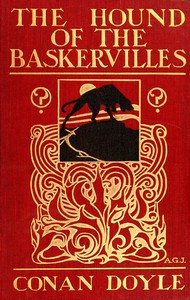
Reading Barry’s wheedling justifications left me oddly homesick for a quieter kind of cunning — the fog-bound menace of the moors, where the threat creeps in sideways. There’s a similar thrill in watching a narrator spin their own version of events, though Holmes at least lets the truth breathe. I finished it feeling wistful, the way you do revisiting an old haunt. The Hound of the Baskervilles — Inside the Classic sits nearby on my shelf, like an old friend’s voice.
There are no reviews for this eBook.
There are no comments for this eBook.
Reader reflection
What was your reading experience?
Capture what you thought, learned, and would like to remember.
Your progress
0
/
10
2
What was your overall reaction to the book?
3
How likely are you to recommend this book?
4
Did the language feel accessible?
5
How clear did the writing feel?
6
How did the reading compare with what you expected?
7
Would this book work well in a reading group?
8
Do you expect to return to this book?
9
In one sentence, what did you learn?
10