1

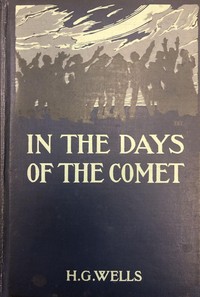
In the Days of the Comet — A Reader’s Guide
(0 User reviews)
1279
Project Gutenberg
2004
Not confirmed
Science fiction; Utopias -- Fiction; Political fiction; Utopian fiction; Comets -- Collisions with Earth -- Fiction
Readers of public-domain and historical texts
Project Gutenberg digital edition
en
Edition facts
Words
85,822
Reading time
374 min
Text sections
24
This digital edition of In the Days of the Comet — A Reader’s Guide is described by source-level measurements including 85,822 words, 6 hr 14 min estimated reading time, and 24 detected text sections.
The text analysis averages about 19.2 words per sentence, while the detected sections provide another way to judge how the source is divided.
Project Gutenberg metadata also associates the work with “Science fiction,” connecting these edition facts with the source record’s subject description.
Source:
Project Gutenberg record #3797
H.G. Wells's 1906 novel uses a comet's transformative green vapors to reset human society, framed by a prologue set in a utopian tower. The narrative follows a narrator's obsessive pursuit of his beloved Nettie and her new lover, revealing class resentment and violent jealousy before the Change.
Read the complete public-domain text at its original source.
Read on Project GutenbergH.G. Wells's In the Days of the Comet opens not with the comet but with a prologue set in an unnamed tower, where a gray-haired writer composes a manuscript. The room is orderly and beautiful, its appointments subtly unfamiliar, and a concave speculum reflects a distant palace and terrace. This framing device immediately establishes a retrospective vantage: the story we are about to read is being told from a transformed world, looking back at the old. The epigraph from Shelley—'The World's Great Age begins anew'—signals the novel's utopian ambition, but the narrative itself begins in gritty, mundane detail: a narrator in Shaphambury, embarrassed by his clothes, carrying a revolver, and fabricating a story about a lost feather boa to justify his inquiries.
A Narrator Divided: Shame, Resentment, and the Revolver
The narrator's voice in the early chapters is marked by acute self-consciousness and class anxiety. When he approaches a grand hotel, the porter's ironic politeness and the young clerk's scrutiny of his collar and tie reduce him to a state of 'social discomfiture.' He feels the bulge of the revolver in his pocket as conspicuous and shameful. This weapon—introduced in the table of contents as a chapter title—becomes a symbol of his violent intentions toward the young couple he pursues. Yet his resolve fluctuates: after a midday lassitude, he lies among pebbles and sea poppies, then later, at twilight, passion and thoughts of honor and revenge return. Wells renders this inner conflict through the narrator's own observations: 'In the old times, night and the starlight had an effect of intimate reality the daytime did not possess.' The contrast between daytime materialism and nighttime romance mirrors the narrator's oscillation between shame and fury.
The Pursuit as Social Critique
The narrator's quest to find Nettie and her companion, Verrall, is not merely a personal vendetta but a vehicle for Wells's critique of Edwardian social hierarchies. The narrator's invented story—a lost feather boa left at his uncle's hotel by a 'young married couple'—is a transparent fiction, and he is acutely aware of his own inadequacy. The hotel's 'gorgeous magnificence' and the porter's German accent underscore the gulf between his world and that of the wealthy. When he questions an outporter, he learns that such men 'remembered luggage rather than people,' a detail that emphasizes the dehumanizing logic of a class system where individuals are reduced to their possessions. Even the salacious old man with a silver ring, who speaks of 'young couples' in general terms, reminds the narrator of 'the sensuous aspects of life'—a discomfort that hints at repressed desires and moral unease beneath the surface of the chase.
Framing the Transformation: The Tower and the Mirror
The prologue's tower room, with its 'concave speculum' that distorts and magnifies the world outside, serves as a structural and thematic key. The writer's pen—'a thing like a fountain pen, a modern touch that prohibited any historical retrospection'—anchors the narrative in a specific technological moment, even as the setting suggests a future beyond history. The mirror's 'distorted and made fantastic' reflection of a palace, terrace, and busy roadway hints at the transformed society that will emerge after the comet. Wells uses this framing to create a tension between the flawed, passionate world of the main narrative and the serene, ordered perspective of the epilogue. The writer's sigh—'ah! you, work, you! how you gratify and tire me!'—humanizes this utopian figure, reminding us that even in the 'Great Good Place,' labor and satisfaction coexist.
Readers should attend to the novel's dual structure: the prologue and epilogue frame the central story as a retrospective account, inviting questions about memory, narrative reliability, and the nature of the Change. The comet itself does not appear until Book the Second, so the early sections reward close attention to the narrator's psychological state and the social textures of the old world. Wells's prose moves between naturalistic detail and philosophical reflection, and the recurring motifs of mirrors, light, and darkness offer clues to the novel's deeper concerns with perception and transformation.
I remember reading In the Days of the Comet as a teenager, feeling that strange ache of wanting the world to dissolve and reform around us, even briefly. It reminded me of the quiet urgency in Harold : the Last of the Saxon Kings — Volume 04 — A Reader’s Guide, where time itself seems to hold its breath before a fall. Both left me staring out a window, wondering about mercy.
There are no reviews for this eBook.
There are no comments for this eBook.
Reader reflection
How will you remember this book?
Save your reaction, strongest insight, and memorable passage.
Your progress
0
/
10
2
Did this book hold your interest?
3
Would you recommend this book to another reader?
4
How demanding did the text feel?
5
Did the book give you something worth debating?
6
How did the reading compare with what you expected?
7
Did the book offer a fresh perspective?
8
Do you expect to return to this book?
9
What is the main idea you are taking away?
10