1

The Ball and the Cross — Themes and Context
(0 User reviews)
1207
Project Gutenberg
2004
Not confirmed
Humorous stories; Male friendship -- Fiction; Scotland -- Fiction; Christian fiction; Catholics -- Fiction; Allegories; Atheists -- Fiction; Men -- Scotland -- Fiction
Readers of public-domain and historical texts
Project Gutenberg digital edition
en
Edition facts
Words
83,334
Reading time
363 min
Text sections
9
The Ball and the Cross — Themes and Context can be approached with a clearer sense of reading commitment from its source measurements: 83,334 words, 6 hr 3 min estimated reading time, and 9 detected text sections.
The text analysis averages about 18.0 words per sentence, while the detected sections provide another way to judge how the source is divided.
Project Gutenberg metadata also associates the work with “Humorous stories,” connecting these edition facts with the source record’s subject description.
Source:
Project Gutenberg record #5265
Chesterton's allegorical novel follows a Catholic and an atheist who agree to duel, only to be repeatedly interrupted by authorities. The narrative moves from a flying ship to a Channel island, using shifting settings and recurring cross imagery to frame their philosophical clash.
Read the complete public-domain text at its original source.
Read on Project GutenbergThe novel opens aboard Professor Lucifer's flying ship, described as a 'silver arrow' cutting through the evening sky. The machine's tools are 'ancient human tools gone mad'—a key with three wheels is a revolver, a tangle of corkscrews is the actual key. This opening establishes a pattern of distorted, dreamlike technology that recurs throughout the work. Chesterton immediately contrasts the professor's scientific marvels with the other passenger: a monk 'almost entirely covered with white hair,' fished from his garden with a lasso. The scene sets up a central tension between rational invention and religious tradition, framed by the ship's improbable altitude.
Aerial Beginnings and the Distortion of Objects
The first chapter introduces a world where objects have lost their familiar shapes. Professor Lucifer's flying ship is not merely a vehicle but a collection of repurposed tools: a revolver disguised as a key, a key that looks like entangled corkscrews. Chesterton writes that 'all the tools of Professor Lucifer were the ancient human tools gone mad, grown into unrecognizable shapes, forgetful of their origin.' This description does more than set a scene; it establishes a motif of misidentification and transformation that runs through the book. The monk, too, is a kind of object out of place—a holy man plucked from his garden by lasso, treated as raw material for improvement. The aerial setting itself is a distortion of normal geography, placing the characters 'far above the stars' and removing them from the grounded contexts where their beliefs might be tested.
The Duel and the Interrupting Policeman
When MacIan and Turnbull finally prepare to duel beneath a crucifix on a hill, the scene is immediately undercut by a bizarre intrusion. MacIan sees 'the figure of a man who appeared for an instant waving his outspread arms'—a parody of the cross—and recognizes it as 'an ordinary London policeman.' The appearance of a constable on a deserted French hill is called 'apocalyptic and almost seraphic,' a comic yet jarring collision of the mundane and the symbolic. The policemen then reveal that the location is not France but the Channel island of St. Loup, a place where the locals speak French but the law is English. This twist transforms the duel from a private affair of honour into a public spectacle, and the cross-shaped policeman becomes a recurring emblem of authority that interrupts the protagonists' attempts at resolution.
Shifting Ground: From Sky to Island
The narrative moves through distinct, almost stage-like settings: the flying ship, a back garden, a French hill that turns out to be an English island. Each location is introduced with precise, often contradictory details. The flying ship is 'bleak blue emptiness'; the island of St. Loup is described as 'His Majesty's dominions, same as 'Ampstead 'eath,' yet the people speak French. This geographical instability mirrors the philosophical uncertainty of the characters. The duel itself is repeatedly deferred—first by the professor's intervention, then by the police. The island setting, with its hybrid identity, becomes a neutral ground that is neither fully one nation nor another, allowing Chesterton to stage arguments without the constraints of a single legal or cultural framework. The movement between these spaces is abrupt, often mediated by the appearance of authority figures who redirect the action.
Recurring Crosses and Parodic Shapes
The cross appears throughout the excerpts as both a literal object and a shape that recurs in unexpected contexts. The crucifix on the hill is the intended witness to the duel; MacIan declares, 'we will fight here and He shall look on at it.' But the cross is immediately parodied by the policeman's outstretched arms, and later by the crossing of swords that makes 'the sign of the cross in horrible parody.' Even the flying ship's silver arrow shape can be read as a secular counterpart. These repetitions create a visual pattern that ties together the aerial, the terrestrial, and the legal. The cross is not merely a symbol of faith but a structural element that appears in the landscape, in gestures, and in the clash of weapons. Chesterton uses this recurrence to suggest that the conflict between belief and unbelief is inscribed into the very forms of the world, whether natural, mechanical, or human.
Readers will find that the novel's structure depends less on plot progression than on a series of confrontations that are continually interrupted and relocated. Pay attention to how each new setting—whether a flying ship, a garden, or an island—reconfigures the terms of the debate between MacIan and Turnbull. The recurring image of the cross, in its literal and parodic forms, offers a visual anchor amid the shifting scenes. Chesterton's prose rewards close attention to the distorted objects and unexpected arrivals that punctuate the narrative.
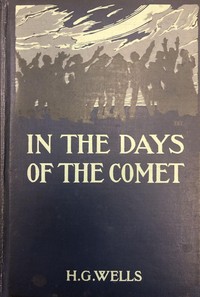
There’s something so tender about two people who can’t stop arguing yet keep finding each other in the quietest places. That book made me think of the strange peace in disagreement, and I found the same lingering feeling in In the Days of the Comet — A Reader’s Guide—like watching old storms settle softly into something almost like home.
There are no reviews for this eBook.
There are no comments for this eBook.
Reader reflection
Record your reading impressions
A brief reflection can help important ideas stay with you longer.
Your progress
0
/
10
2
How much did you enjoy the reading experience?
3
Is this a title you would suggest to others?
4
Did the language feel accessible?
5
Did the book give you something worth debating?
6
Did the book meet your expectations?
7
Did anything about the book feel genuinely new?
8
Which aspect of the book did you value most?
9
What is the main idea you are taking away?
10