1


Guy Mannering, Or, the Astrologer — Complete — A Reader’s Guide
(0 User reviews)
1800
Project Gutenberg
2004
Not confirmed
Historical fiction; Inheritance and succession -- Fiction; Disinheritance -- Fiction; Scotland -- Fiction; Astrologers -- Fiction
Readers of public-domain and historical texts
Project Gutenberg digital edition
en
Edition facts
Words
183,031
Reading time
796 min
Text sections
16
Guy Mannering, Or, the Astrologer — Complete — A Reader’s Guide can be approached with a clearer sense of reading commitment from its source measurements: 183,031 words, 13 hr 16 min estimated reading time, and 16 detected text sections.
The text analysis averages about 23.9 words per sentence, while the detected sections provide another way to judge how the source is divided.
Project Gutenberg metadata also associates the work with “Historical fiction,” connecting these edition facts with the source record’s subject description.
Source:
Project Gutenberg record #5355
Walter Scott's novel weaves astrology, inheritance, and legal intrigue around the disappearance of Harry Bertram, heir to Ellangowan. The narrative contrasts the astrologer Guy Mannering's planetary predictions with the cunning lawyer Glossin's manipulations, set against the Scottish landscape and local dialect.
Read the complete public-domain text at its original source.
Read on Project GutenbergThe opening of Guy Mannering presents a striking contrast between the supernatural and the legalistic. The novel begins with an astrologer, Guy Mannering, casting a horoscope for the newborn heir of Ellangowan, predicting a life of danger and eventual restoration. This occult framework is immediately juxtaposed with the meticulous legal maneuvers of Gilbert Glossin, a lawyer who later acquires the estate through dubious means. Scott’s narrative voice shifts between the astrologer’s planetary calculations and the lawyer’s pragmatic scheming, creating a tension between fate and human agency. The excerpts reveal a world where the stars are consulted but property deeds and legal documents ultimately determine power.
Astrology as Narrative Frame
The novel’s subtitle, Or, the Astrologer, signals the importance of planetary influence. In the introduction, Scott recounts a folk tale about a stranger who predicts a child’s future based on the exact minute of birth. This story, told by an old Highlander, frames the novel’s central mystery: the disappearance of Harry Bertram. The astrologer Mannering does not practice for hire, claiming to use his knowledge only for those he cares about. Yet his predictions set events in motion, and the reader is left to weigh whether the stars or human actions drive the plot. The excerpts show Mannering’s horoscope as a catalyst, but the narrative quickly moves to legal and social machinations.
Law and Land: The Rise of Glossin
Gilbert Glossin embodies the shift from feudal to commercial society. As a lawyer, he uses legal technicalities to acquire Ellangowan, and the excerpts show him ingratiating himself with local gentry. In one scene, he discusses tea and sugar prices while planning a dinner party, signaling his bourgeois values. His interrogation of a prisoner reveals a methodical, almost theatrical approach to justice: he orders his clerk to hand down Sir George Mackenzie’s legal treatise and prepares his study like a stage. Scott’s depiction of Glossin’s rise is laced with irony, as characters like the Deacon remark that “the deil’s no sae ill as he’s ca’d,” suggesting a grudging respect for his efficiency.
Dialect and Social Hierarchy
Scott uses Scots dialect to distinguish social classes and regions. In the excerpts, the Deacon, Mrs. Mac-Candlish, and Jock Jabos speak in broad Scots, while Glossin and Mannering use standard English. This linguistic divide reinforces the tension between local tradition and external influence. For instance, the Deacon’s comment about Glossin’s half-crown— “a gude half-crown ony way”—reveals a pragmatic acceptance of new money. The landlady’s remark that “folk maunna look ower nicely at what king’s head’s on’t” underscores the theme of moral compromise. These dialect passages provide a textured social landscape, grounding the novel’s conflicts in everyday speech.
Readers should attend to how Scott balances the astrological premise with the legal and social realism. The novel’s structure—alternating between Mannering’s predictions and Glossin’s schemes—invites comparison between fate and human ambition. The excerpts offer only glimpses of the full plot, but they reveal a work deeply concerned with property, justice, and the erosion of old hierarchies. Pay attention to the role of secondary characters, whose dialect and actions often comment on the main events.
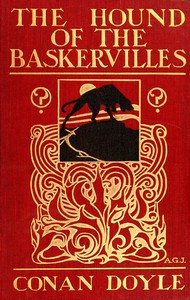
I remember reading this beside a fire, the astrology feeling less like superstition than a quiet weight of fate. It stirred the same ache I felt with The Hound of the Baskervilles — Inside the Classic, where the moor’s fog hides inheritance and old wrongs. Both books whisper that land remembers what people try to bury. I closed mine and just sat, listening to the wind.
There are no reviews for this eBook.
There are no comments for this eBook.
Reader reflection
Before you leave, reflect on the book
Use these questions to collect your thoughts before moving on.
Your progress
0
/
10
2
How much did you enjoy the reading experience?
3
How likely are you to recommend this book?
4
How demanding did the text feel?
5
How strong was your personal connection to the text?
6
How clearly were the main ideas presented?
7
Would you read this book again?
8
Did the book deliver what you hoped for?
9
What did this book teach you most?
10