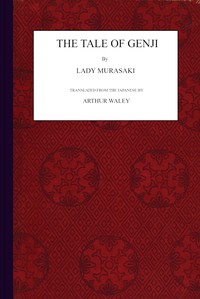
The tale of Genji by Murasaki Shikibu

(2 User reviews)   2528
By Jacob Brown Posted on Jan 13, 2026
In Category - Time Travel
Murasaki Shikibu, 978?- Murasaki Shikibu, 978?-
English
Imagine a book written a thousand years ago that feels more modern than half the shows on Netflix. That's 'The Tale of Genji.' Forget knights in armor—this is about a prince so dazzlingly handsome and charming he basically breaks the Heian-era Japanese court just by existing. The 'conflict' isn't a war; it's the quiet, devastating chaos one man's search for perfect love leaves in his wake. He's not a villain, but his pursuit of beauty and fleeting moments causes real pain. It's a sprawling, poetic, sometimes frustrating story about desire, regret, and the seasons of a life. Think of it as the world's first psychological novel, where a glance across a garden or the scent of a perfume carries more weight than a sword fight. It's a slow, beautiful burn that will completely change how you see classic literature.
Share

Read "The tale of Genji by Murasaki Shikibu" Online

This book is available in the public domain. Start reading the digital edition below.

START READING FULL BOOK
Instant Access    Mobile Friendly

Book Preview

A short preview of the book’s content is shown below to give you an idea of its style and themes.

that the whole fifty-four were not finished till long afterwards. But from the _Sarashina Diary_, the first of the three contained in the _Court Ladies of Old Japan_, we know that the _Tale of Genji_ in its complete form was already a classic in the year 1022. The unknown authoress of this diary spent her childhood in a remote province. Her great pleasure was to read romances; but except at the Capital they were hard to come by. She prays fervently to Buddha to bring her quickly to Kyoto, and let her read ‘dozens and dozens of stories.’ In 1022 she at last arrives at Court and her wildest dreams are fulfilled. Packed in a big box her aunt sends round ‘the fifty-odd chapters of _Genji_’ and a whole library of shorter fairy-tales and romances. ‘Are there really such people as this in the world? Were Genji my lover, though he should come to me but once in the whole year, how happy I should be! Or were I Lady Ukifune in her mountain home, gazing as the months go by at flowers, red autumn leaves, moonlight and snow; happy, despite loneliness and misfortune, in the thought that at any moment the wonderful letter might come....’ Such were the _rêveries_ of one who read the _Tale of Genji_ more than nine hundred years ago. I think that, could they but read it in the original, few readers would feel that in all those centuries the charm of the book had in any way evaporated. The task of translation in such a case is bound to be arduous and discouraging; but I have all the time been spurred by the belief that I am translating by far the greatest novel of the East, and one which, even if compared with the fiction of Europe, takes its place as one of the dozen greatest masterpieces of the world. CONTENTS PAGE PREFACE 7 LIST OF MOST IMPORTANT PERSONS 11 GENEALOGICAL TABLES 13 CHAPTER I. KIRITSUBO 17 II. THE BROOM-TREE 39 III. UTSUSEMI 81 IV. YŪGAO 92 V. MURASAKI 135 VI. THE SAFFRON-FLOWER 180 VII. THE FESTIVAL OF RED LEAVES 211 VIII. THE FLOWER FEAST 239 IX. AOI 250 APPENDICES 297 LIST OF MOST IMPORTANT PERSONS (ALPHABETICAL) Aoi, Princess Genji’s wife. Asagao, Princess Daughter of Prince Momozono. Courted in vain by Genji from his 17th year onward. Emperor, The Genji’s father. Fujitsubo The Emperor’s consort. Loved by Genji. Sister of Prince Hyōbukyō; aunt of Murasaki. Genji, Prince Son of the Emperor and his concubine Kiritsubo. Hyōbukyō, Prince Brother of Fujitsubo; father of Murasaki. Iyo no Suke Husband of Utsusemi. Ki no Kami Son of Iyo no Kami, also called Iyo no Suke. Kiritsubo Concubine of the Emperor; Genji’s mother. Kōkiden The Emperor’s original consort; later supplanted by Kiritsubo and Fujitsubo successively. Koremitsu Genji’s retainer. Left, Minister of the Father of Aoi. Momozono, Prince Father of Princess Asagao. Murasaki Child of Prince Hyōbukyō. Adopted by Genji. Becomes his second wife. Myōbu A young Court lady who introduces Genji to Princess Suyetsumuhana. Nokiba no Ogi Ki no Kami’s sister. Oborozukiyo, Princess Sister of Kōkiden. Ōmyōbu Fujitsubo’s maid. Right, Minister of the Father of Kōkiden. Rokujō, Princess Widow of the Emperor’s brother, Prince Zembō. Genji’s mistress from his 17th year onward. Shōnagon Murasaki’s nurse. Suyetsumuhana, Princess Daughter of Prince Hitachi. A timid and eccentric lady. Tō no Chūjō Genji’s brother-in-law and great friend. Ukon Yūgao’s maid. Utsusemi Wife of the provincial governor, Iyo no Suke. Courted by Genji. Yūgao Mistress first of Tō no Chūjō then of Genji. Dies bewitched. GENEALOGICAL TABLES ┌ Prince Zembō, _m_. Lady...

This is a limited preview. Download the book to read the full content.

Okay, let's be real: summarizing a 1,000-page, 1,000-year-old classic in a paragraph is like trying to describe the ocean with a teaspoon. But here's the gist. We follow the life of Genji, the 'Shining Prince,' from his dazzling youth as the emperor's favorite son (born to a low-ranking concubine) through his many romantic entanglements, political rises and falls, and into his later years. The plot isn't a single, driving narrative. It's more like watching a life unfold in episodes—his passionate affairs, his complex marriages, his longing for his lost mother, and the lives of the women he loves (and often fails). The story continues beyond Genji, following the next generation and the echoes of his actions.

Why You Should Read It

First, it's just stunningly human. Murasaki Shikibu wasn't writing about gods or heroes; she was writing about people with messy feelings. You'll be amazed at how familiar Genji's world feels—the jealousy, the social anxiety, the way a memory can wreck your day. The book is a masterclass in atmosphere. You can feel the damp of the rainy season, see the specific shade of a lavender robe, and sense the profound loneliness behind a palace screen.

Reading it feels like a quiet rebellion. A woman in the 11th century, confined to court life, created this monumental, psychologically deep work that outlasted empires. She gives voice to the women, who are often just as complex and compelling as Genji himself. It's not a fast read, but it's a deeply rewarding one that seeps into your bones.

Final Verdict

This is for the patient reader who loves to get lost in a world. Perfect for fans of rich historical fiction like Hilary Mantel's work, or anyone who appreciates character studies over plot fireworks. If you love seeing where the novel as a form began, this is your essential origin story. Don't go in expecting a page-turner; go in expecting to visit another world, one you'll think about long after you've closed the book. A challenging, beautiful, and unforgettable journey.


📚 Community Domain

Legal analysis indicates this work is in the public domain. Use this text in your own projects freely.

Jackson Wilson
1 year ago

Honestly, it challenges the reader's perspective in an intellectual way. I will read more from this author.

Michelle Anderson
4 months ago

Very interesting perspective.

4.5
4.5 out of 5 (2 User reviews )

Add a Review

Your Rating *
There are no comments for this eBook.
You must log in to post a comment.
Log in


Related eBooks