
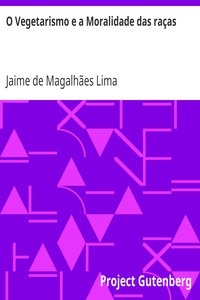
O Vegetarismo e a Moralidade das raças by Jaime de Magalhães Lima
Read "O Vegetarismo e a Moralidade das raças by Jaime de Magalhães Lima" Online
This book is available in the public domain. Start reading the digital edition below.
START READING FULL BOOKBook Preview
A short preview of the book’s content is shown below to give you an idea of its style and themes.
This isn't a cookbook or a health manual. O Vegetarismo e a Moralidade das Raças (Vegetarianism and the Morality of Races) is a philosophical and social argument from 1912. Author Jaime de Magalhães Lima, a prominent Portuguese writer and pacifist, makes a case for vegetarianism. But his reasoning goes far beyond animal welfare or personal health. He ties the practice of not eating meat directly to a person's—and by extension, a race's—moral and spiritual development.
The Story
There isn't a plot with characters. Think of it as a long, passionate essay. Lima argues that eating meat is a primitive, violent act that holds back human progress. He believes societies that adopt vegetarianism are naturally more peaceful, ethical, and spiritually advanced. The controversial heart of the book is where he applies this idea to different human races, ranking them based on this dietary-moral scale. It presents a worldview where your dinner is a direct sign of your civilization's standing.
Why You Should Read It
It's fascinating as a historical document. It shows how social Darwinism and now-debunked racial science were woven into everyday arguments, even progressive ones like vegetarianism. It’s uncomfortable and ethically messy, which is precisely why it’s thought-provoking. It forces you to see how even well-intentioned ideas can be built on shaky, harmful foundations. Reading it today is a stark reminder of how cultural beliefs about 'superiority' can infiltrate any topic.
Final Verdict
This book is not for someone looking for dietary tips. It's perfect for readers interested in the history of ideas, the sociology of food, or early 20th-century European thought. Approach it as a primary source—a snapshot of a specific time and mindset. Be prepared to disagree with its core thesis, but you'll likely come away with a deeper understanding of how morality, science, and prejudice can get tangled together.
You are viewing a work that belongs to the global public domain. Enjoy reading and sharing without restrictions.
Elizabeth Lopez
10 months agoI had low expectations initially, however the depth of research presented here is truly commendable. I will read more from this author.
Elijah Scott
1 year agoNot bad at all.
Kevin Clark
1 year agoWithout a doubt, the arguments are well-supported by credible references. This story will stay with me.
Emily White
7 months agoI have to admit, the emotional weight of the story is balanced perfectly. Exactly what I needed.




Mason Lopez
1 month agoAfter hearing about this author multiple times, the author's voice is distinct and makes complex topics easy to digest. One of the best books I've read this year.